The Knight
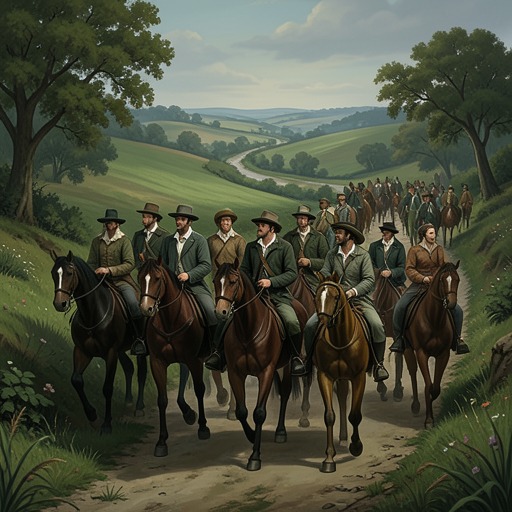
The Canterbury TalesThe Knight is the first member of the Company of Canterbury Pilgrims whom the narrator presents, and he is significant both as a person and as a standard against which the company’s varied social characters can be measured. His identity joins military experience to ethical discipline: he has ridden in the world in pursuit of honor and chivalry, yet his distinction lies not merely in victories but in the manner of his conduct. When the company’s lot falls to him, he begins the storytelling contest, and The Knight’s Tale becomes the work’s first major tale.
Identity and Introduction
The narrator announces that the company will be described by rank, appearance, and manner, then chooses The Knight as the point of departure. His introduction is therefore social as well as personal. He stands at the head of the pilgrimage portrait, embodying the estate that medieval ideals most closely associate with public service, warfare, honor, and disciplined behavior. The choice gives him an emblematic position before he has performed any action in the storytelling sequence: he is the first figure through whom the narrator organizes the human world of the book.
The Knight is described as a worthy man who has loved honor and chivalry from the first time he began to ride about. His identity is thus presented as a long-established vocation rather than a temporary pose. Chivalry is not simply an ornament attached to his title; it is the governing principle by which his life has been understood. The narrator’s phrasing makes his commitment continuous, extending from the beginning of his riding career to the moment of the pilgrimage.
Character and Conduct
The Knight’s public reputation rests on an unusual union of valor and wisdom. He is said to have found the highest favor in all eyes, and the narrator identifies him as a valiant warrior who was also wise. Courage alone would make him formidable, but wisdom makes his martial identity responsible rather than merely aggressive. His authority comes from the combination of what he can do in conflict and how intelligently he conducts himself beyond it.
His behavior is marked by humility and gentleness. Although he is a warrior, his deportment is described as meek as any maid. The contrast is deliberate: the figure who has proved himself in armed action does not carry himself with swagger or cruelty. He never speaks unkindly, never plays the villain’s part, and always does the right. These details turn his chivalry into an ethical practice of speech, self-presentation, and action, culminating in the narrator’s judgment that he is a perfect, gentle knight.
Experience and Appearance
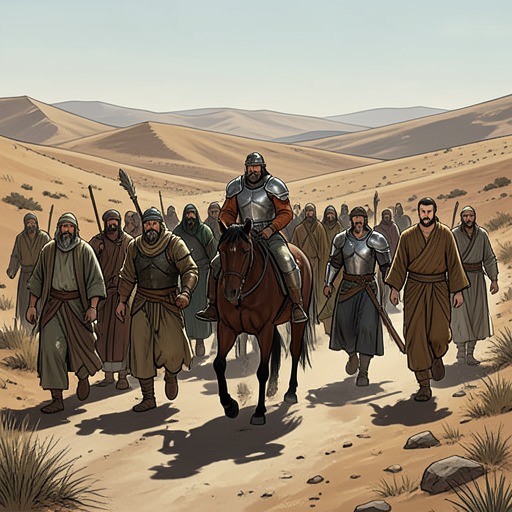
The evidence identifies The Knight as a seasoned participant in warfare, including work performed against a fellow heathen Turk and service associated with the lord of Palathia. These references place him within the wider military and religious conflicts that define the world of medieval chivalry. His experience is not presented as a single exploit but as part of a history of riding and campaigning, giving weight to the honor he has earned.
His clothing does not display his status through lavishness. The narrator notes that he has good horses but is not richly clad. This modest appearance prevents wealth or decoration from becoming the visible source of his dignity. His excellence is instead located in his deeds and conduct. The plainness of his array also creates a productive contrast between social rank and outward display: he possesses the equipment appropriate to a knight, but he does not turn material splendor into a performance of superiority.
Role in the Storytelling Contest
Chance, fate, or accident causes the lot to fall to The Knight, and the rest of the company takes delight in the result. The selection is not represented as a contested victory or a claim to privilege; it is accepted as the rule of the contest. Once chosen, he must tell his tale, and he begins at once with merry cheer. His willingness to enter the contest gives the formal pilgrimage narrative its first transition from description to storytelling.
The title The Knight’s Tale marks the beginning of his contribution and gives his social identity a second function. He is not only the first pilgrim described but also the first pilgrim whose narrative is heard. The tale therefore extends his characterization: the courteous, experienced knight becomes the voice that opens the sequence of competing narratives. The narrator’s presentation of him establishes an initial ideal of order and decorum before later speakers can complicate, challenge, or parody the values associated with it.
Narrative Significance
The Knight is constructed as an exemplary, highly legible character. The narrator gathers his identity around a coherent set of qualities—honor, chivalry, valor, wisdom, meekness, kindness, right conduct, and modest appearance—so that he functions less as a figure of sudden transformation than as a stable ideal. His portrait supplies the moral and social baseline from which the rest of the company’s diversity can be understood.
His significance also lies in the tension between warfare and gentleness. The Knight has participated in conflict, yet the narrator refuses to define him through violence alone. Military achievement gains legitimacy only when joined to wisdom, courtesy, and moral restraint. By placing this figure first and allowing chance to appoint him as the first teller, the narrative gives chivalry the opening word: The Knight’s Tale begins the contest under the sign of honor, while the larger collection remains free to test how fully that ideal can survive among different voices and forms of storytelling.